How Often Should You Check Your AI Visibility? Daily vs Weekly
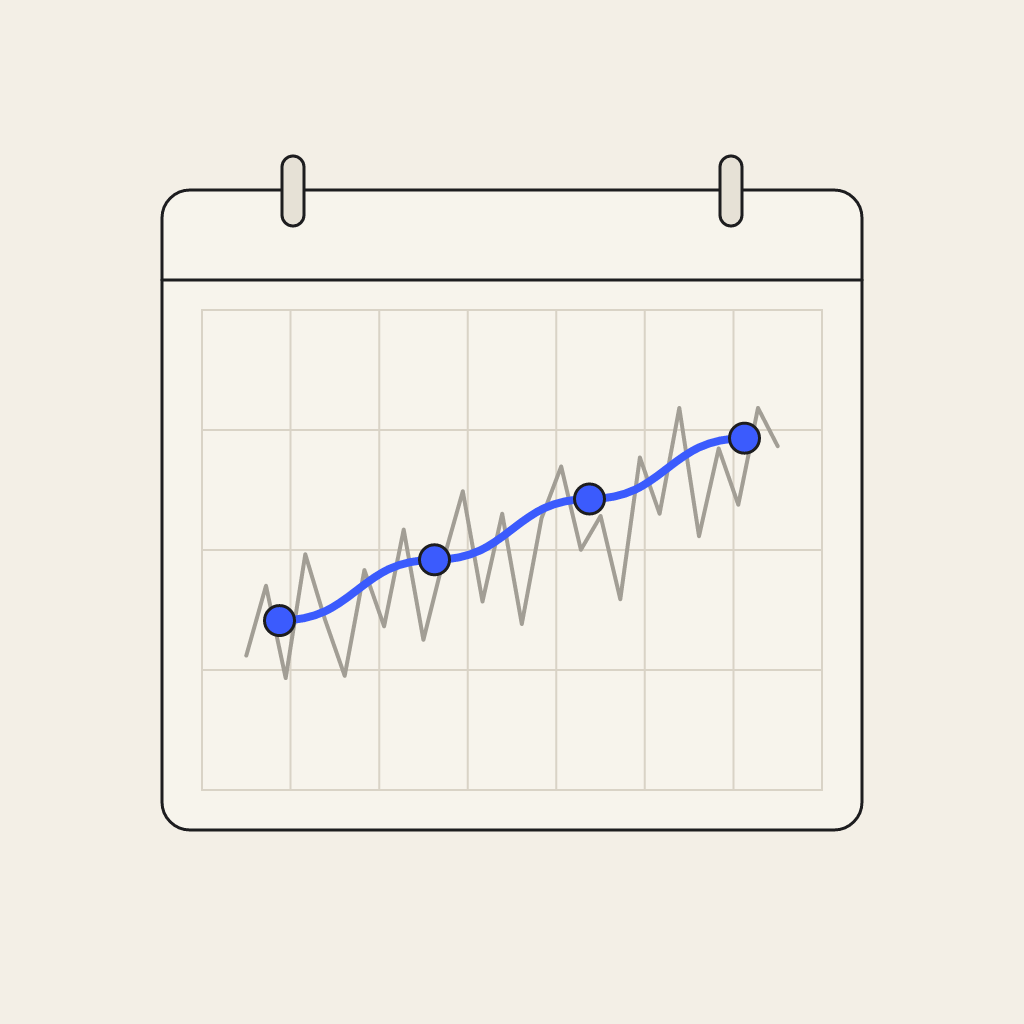
For most small businesses, checking your AI visibility once a week is enough. AI answers about your brand can change from one day to the next with nothing changed on your side, and the changes you make (new pages, links, reviews, listings) take days to weeks to show up. So read the trend over 3 to 4 weeks, across many buyer questions, rather than one day's answer. Daily checks make sense in specific cases: a launch, a crisis, a large brand, or an ads test.
A common scene: an owner asks ChatGPT for the best bakery in their town on Monday, sees a competitor named, and worries. On Tuesday, the same question names them. Both answers are real. Neither one, alone, tells you where you stand. What matters is the trend over several weeks.
Why do AI answers about my brand change from one day to the next?
AI assistants do not look up a stored answer. They write a new one each time, and several things can move between two runs:
- Randomness in generated answers. The same question can name different businesses, or the same ones in a different order, from one run to the next, with nothing changed.
- The web results the assistant reads. Assistants that search the web pick up results at the moment of the question. If those results shift, the answer shifts.
- Model updates. Providers update their models, and after an update the same question can get a different answer.
- Location and wording. "Plumber near me" and "emergency plumber in Austin open on Sunday" are different questions. Where the person is, and their exact words, change the answer.
Each assistant also has its own sources and habits, which is why a brand can be visible in one AI but not another. The practical lesson: one answer is a sample, not a score. Day-to-day swings are mostly noise.
Why do your changes take days to weeks to show up?
When you publish a page, earn a link or collect new reviews, AI answers do not update that afternoon:
- Crawling and indexing. A new or updated page has to be crawled and indexed before assistants that search the web can use it.
- Links being found. A new link from another site takes time to be found.
- Reviews and listings. New reviews and updated listings sit on other sites, and those pages also have to be read again before they can count.
There is no fixed delay. Days to weeks is the honest range, and it varies by site and by assistant. During that time, a daily chart will show plenty of moves that have nothing to do with your work.
Daily vs weekly AI visibility tracking: which should you choose?
Both are valid. They suit different needs.
| Daily checks | Weekly checks | |
|---|---|---|
| Answers per question and assistant | About 30 a month | About 4 a month |
| Day-to-day noise | More answers average it out better | Fewer answers, so read 3 to 4 weeks and many questions |
| Pace | Faster than your changes can move results | Matches the days-to-weeks pace of change |
| Cost | Costs more to run, more answers per dollar | Costs less to run, fewer answers per dollar |
| Spotting a sudden drop | Within a day | Within a week |
| Fits | Teams that read data every day | A small business that works from a weekly to-do list |
To be fair to daily tools: they give many more answers per dollar. In our check of November 22, 2026, that was about $0.008 per answer at SE Visible, about €0.015 at Otterly and about $0.021 at Peec, against about $0.05 to $0.09 at Operato AI. More answers average out the noise better. If raw answer volume is your goal, a daily tracker gives you more of it. The full table is in AI visibility tool prices compared, and if you are weighing Peec, see Peec AI alternatives for small businesses.
The case for weekly is about pace. A small business acts on a list once a week, not every morning. A weekly check matches the pace at which your work can actually move the result, and keeps the price low.
When do daily checks make sense?
- A launch. A new product, a new name or a new site: you want to see when assistants start to pick it up.
- A crisis. Bad press or wrong information about you: you want to see each day what assistants repeat.
- A large brand. Hundreds of questions, several markets and a team that reads data every day. At that scale, more answers average out the noise better.
- An ads test. Ad spend and clicks change every day, and during a short test you may want unpaid answers at the same pace. Afterwards, a weekly view of paid and unpaid results side by side usually does the job: see how to measure ChatGPT ads results.
Outside these cases, a weekly check matches what a local business or a small online shop can act on, because its changes show up over days to weeks.
How do you monitor AI visibility score changes weekly?
- Keep the same questions. Changing them every week breaks the trend. Use 10 to 20 questions your buyers ask, without your brand name. Our guide on how to check your AI visibility shows how to write them.
- Cover each assistant you care about. One assistant can move while the others hold.
- Track the same few measures. The share of questions where you are named, your position, the competitors named and the sources cited. The AI visibility score guide explains each one, and comparing your AI visibility with competitors shows how to read the competitor side. For a full list of what to check each time, use the recurring AI visibility audit checklist.
- Compare 3 to 4 weeks, not 2 days. A move that holds across weeks and across many questions is a signal. A move on one question in one week is usually noise.
- Write down what you changed and when. Since changes take days to weeks to show, a dated note lets you connect a later move to the work behind it.
- Work from one list. Pick the fixes for the week, do them, and mark them done.
Where Operato AI Fits
Operato AI runs a weekly scan. Every week, each of your buyer questions is asked once to each assistant, with web search. You see whether your business is named, in what position, which competitors are named, which sources are cited and the sentiment. A weekly report email sums it up, and a weekly to-do list of fixes lets you mark each one done.
Plans start at $9 a month (Solo: 10 questions on Google AI Overviews, Google AI Mode, Gemini and Perplexity), billed monthly with no commitment. ChatGPT and Claude are add-ons at $10 a month each. Because the scan is weekly, you get fewer answers per dollar than with a daily tracker, so if you need daily data, a daily tool fits you better. To choose, read the right AI visibility tool for a small business, get your free AI readiness score or see pricing.
FAQ
How often should I check my AI visibility? Once a week suits most small businesses. Read the trend over 3 to 4 weeks across many questions, and act from a weekly list.
Is daily AI visibility tracking better than weekly? It depends on your needs. Daily checks collect more answers and average out noise better. Weekly checks match the pace at which your changes show up, cost less and fit a weekly to-do list.
Why do AI answers about my brand change from one day to the next? Assistants write a new answer each time, read web results that change, get model updates, and adapt to the person's location and wording. The same question can get a different answer the next day with nothing changed.
How long do website changes take to show up in AI answers? Days to weeks. A page has to be crawled and indexed before assistants that search the web can use it, and new links take time to be found.
How many weeks should I wait before judging a change? Look at 3 to 4 weeks of results across many questions before deciding whether something worked.
When should I switch to daily checks? During a launch, a crisis or an ads test, or if you run a large brand with a team that reads data every day.