Earned and Paid in AI Assistants: Why You Need the Full Picture
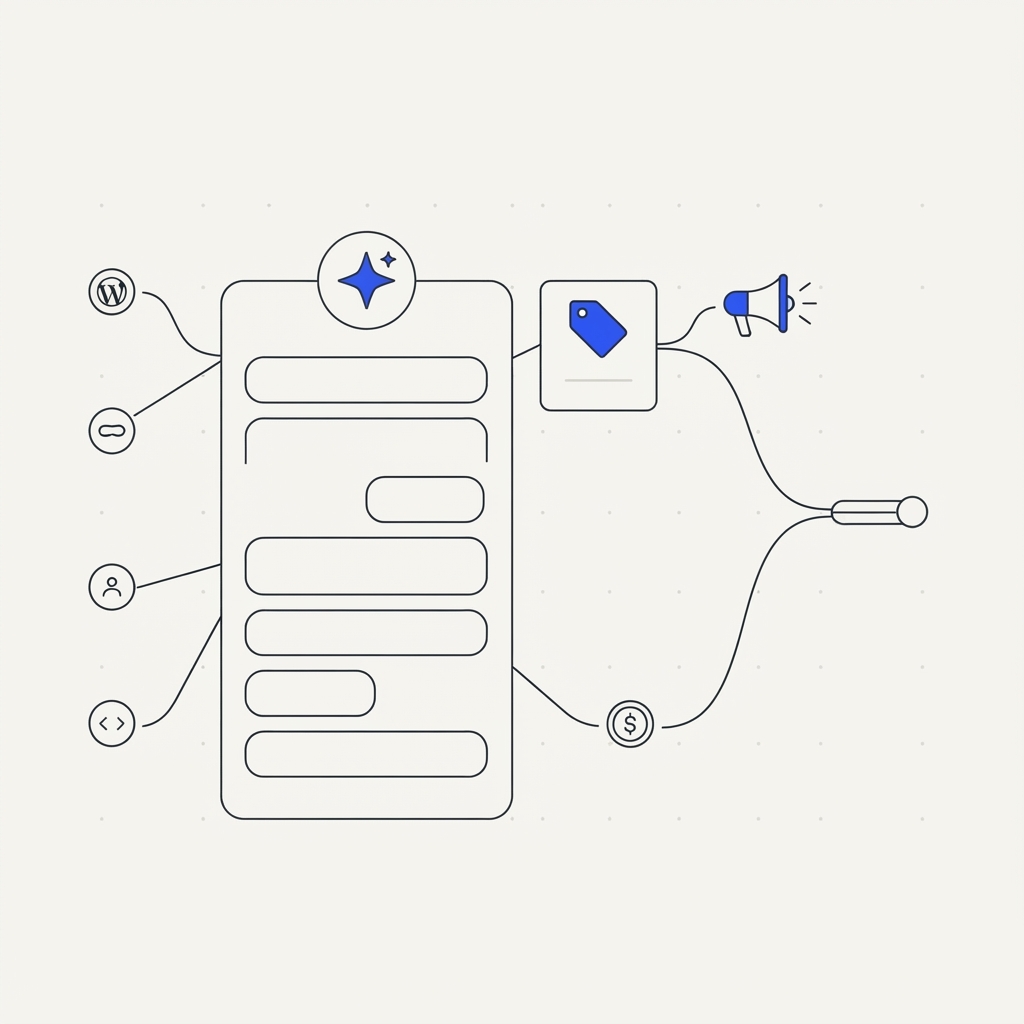
When someone asks ChatGPT "what's the best accounting software for a small agency?", two things can happen on the screen. The assistant writes an answer and recommends a few names. And, for some users, a sponsored placement appears next to that answer.
Those are two different ways to be in front of a buyer at the moment they are deciding. The first is earned: nobody paid for it, the assistant chose you. The second is paid: you bought the spot. Most businesses look at one or the other. The ones that get the most out of AI assistants look at both, side by side.
Two layers, one buyer
The earned layer is the answer itself. When ChatGPT, Claude, Gemini or Perplexity recommend brands, they draw on what they know and on the pages they find: your site, review sites, comparison articles, directories. Improving your place in those answers is what people call generative engine optimization (GEO) or AI SEO.
The paid layer sits next to the answer. ChatGPT now offers ads to businesses, shown as clearly labeled sponsored placements. According to OpenAI, buying an ad does not change what ChatGPT says in its answer. The two layers are separate by design.
That separation is exactly why you need to look at both. The same buyer reads the answer and may see the ad. What they decide depends on the whole screen, not on the half you happen to be measuring.
What you miss when you look at one half
Put your earned visibility and your paid spend on the same page, and four situations appear:
| You are recommended in the answer | You are not recommended | |
|---|---|---|
| You run ads | You may be paying for attention you already get for free. Test whether the ads add anything. | You are renting visibility. Ads can help now, but the gap stays open until the answer changes. |
| You don't run ads | Your strongest position. Protect it and watch for competitors catching up. | You are invisible at the moment of decision. This is where to act first. |
Looked at alone, each half tells a misleading story:
- Only paid: an ad dashboard can look excellent while you are already the assistant's first recommendation. The ad then reaches people who would have chosen you anyway.
- Only earned: you may know a competitor wins a question, but not whether a placement on that exact question would be worth buying while you work on the answer.
How the two work together
GEO and paid ads are not competing budgets. Each one makes the other smarter.
Earned data tells paid where to spend.
- The questions where a competitor is recommended instead of you are the obvious candidates for paid placements while you fix the answer.
- The questions where you already lead are where to be careful with spend: your ads may add little there.
- The sites the assistants cite tell you which third-party pages shape the answers in your category.
Paid data tells earned what buyers really ask.
- Ad search terms and the conversations your ads appear next to show how real buyers phrase their questions, often differently from how you would.
- Those phrasings belong in the set of questions you track, and in the pages you write to answer them.
Earned work makes the advantage last. An ad stops the day the budget stops. A clear page that answers a buyer's question, a mention on the sites assistants rely on, a website that AI crawlers can read: these keep working week after week.
Measure each layer honestly
Both layers need numbers you can trust, and each comes with its own trap.
For the earned layer, one manual check proves very little. Assistants answer differently from one try to the next and from one assistant to another. You need the same questions, asked repeatedly, on every major assistant, every week, so the trend means something.
For the paid layer, every platform grades its own homework. The return an ad platform reports includes people who would have bought anyway. The question that matters is what the ads add on top of what you already earn. Answering it properly needs a comparison: periods, regions or audiences with ads against similar ones without. Our guide How to Advertise on ChatGPT explains the three numbers to look at.
A simple weekly routine
- Check where you stand in the answers. Your visibility and rank on the questions your buyers ask, assistant by assistant, and who is recommended instead of you.
- Pick one fix. One page to write, one site to get listed on, one technical problem to solve. One done is worth more than ten planned.
- Look at your ads next to it. Are you paying on questions you already win? Are you absent, and not advertising, on the ones you lose?
- Feed what you learn back. New buyer phrasings from your ads go into your tracked questions; questions you now win may need less spend.
What we are building at Operato AI
Operato AI exists because we kept seeing the same gap: GEO tools that ignore ads, and ad tools that ignore what the assistants recommend for free. We put both in one place.
On the earned side, today:
- Weekly tracking on ChatGPT, Claude, Gemini, Perplexity, Google AI Overviews and AI Mode, on the questions your buyers ask, with your rank, visibility and presence against the competitors you choose.
- Who gets recommended instead of you, question by question, and the sites the assistants cite.
- Action items: what to fix first, each with three concrete steps, so you always know the next thing to do.
- Site checks and ready-made files: whether AI crawlers can read your site, and the robots.txt and llms.txt files to fix it, with steps for Wix, Shopify, WordPress and Squarespace.
- A weekly report by email: your rank, your next fix and what changed since last week.
On the paid side:
- ChatGPT Ads reporting: connect your ChatGPT Ads account and see your spend, impressions and clicks in the same app as your AI visibility.
What we don't claim yet: a true incremental return for AI assistant ads needs a proper holdout test, and we will only show that number once it is measured on real accounts. We would rather show you less than show you something we cannot stand behind.
Plans start at $39 a month with all six assistants included, and every account starts with a free trial, no credit card required.
Want a first look before the trial? Take the free AI visibility checker: it checks whether AI assistants can read your website in a couple of minutes. Then start your free trial to see who AI recommends instead of you.
FAQ
What is the difference between GEO and ads in AI assistants? GEO improves your place in the answer itself, what the assistant recommends without anyone paying. Ads buy a clearly labeled sponsored placement next to the answer.
Do ChatGPT ads improve what ChatGPT recommends? According to OpenAI, no. Ads are separate from the answer. Being recommended in the answer depends on your earned visibility.
Should I start with GEO or with ads? Start by measuring where you stand in the answers. If you are invisible on key questions, ads can fill the gap while you fix the answer. If you are already recommended, first test what ads really add.
How do I know if my ads in AI assistants work? Compare the platform-reported return with your blended return, then test incrementality: similar periods, regions or audiences with and without ads.