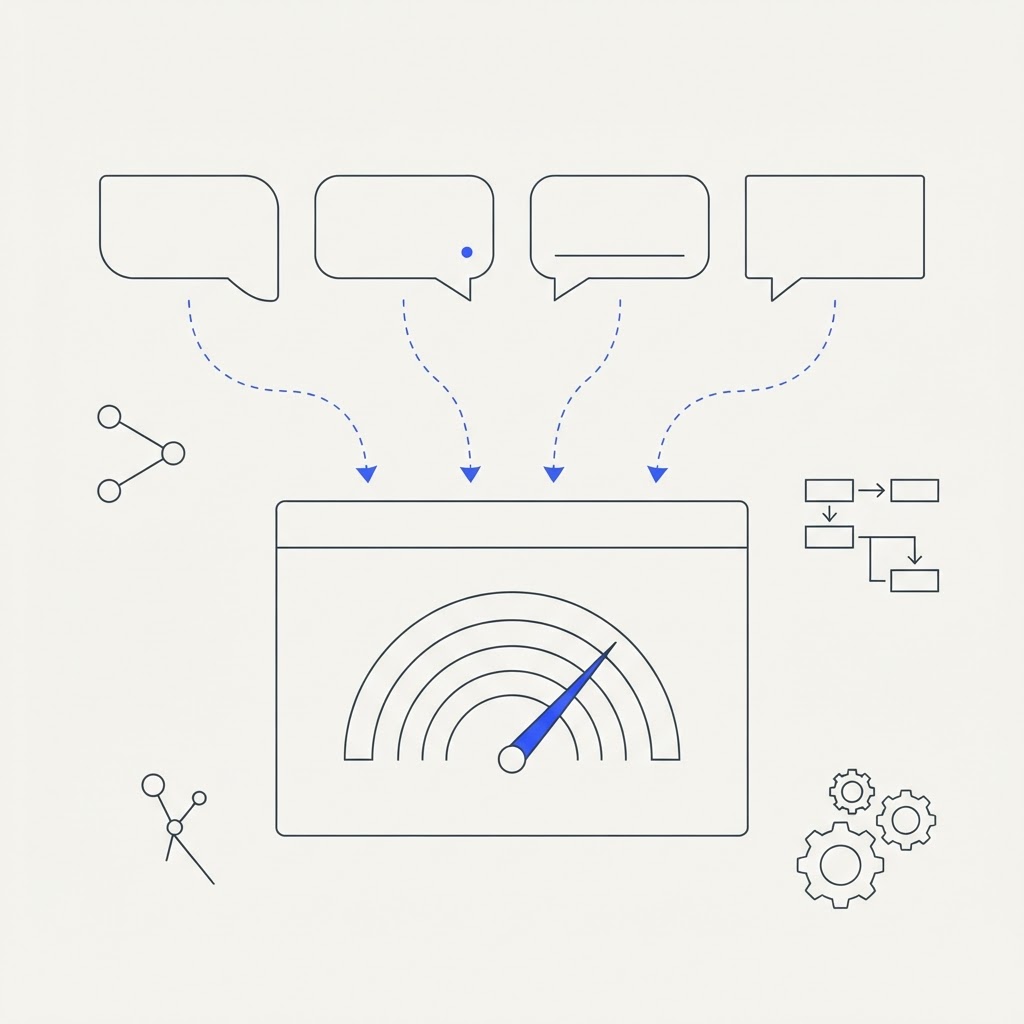
If you've only checked ChatGPT and called it done, you've checked one engine out of at least six that matter. Google Gemini (and AI Overviews baked into regular search), Perplexity, Microsoft Copilot, Meta AI, and Grok are all forming independent opinions about your brand right now, from different training data, different retrieval systems, and different real-time web crawls. A brand can be strongly recommended by Perplexity and completely absent from Gemini in the same week. Tracking "AI visibility" as if it were one number is the first mistake. Here's how to actually track it, engine by engine, without turning it into a full-time manual chore.
Why can't I just check one AI and assume the rest are the same?
Each assistant answers from a different mix of sources: ChatGPT leans on its training data plus live browsing, Perplexity is almost entirely live-search-driven with visible citations, Gemini pulls heavily from Google's index and AI Overviews reuse a lot of classic SEO signals, and Copilot leans on Bing's index. That means the exact same question, "who's the best [category] for a growing SaaS company," can surface a completely different shortlist in each one. A brand doing well in classic Google SEO but ignoring Bing/Copilot, or doing well in Perplexity's live search but invisible in Gemini's index-based answers, has a real, measurable gap, not a rounding error. If you've only ever run the "ask ChatGPT about my brand" test once, read why brands go invisible to AI first, then come back here to build the cross-engine habit.
What does "tracking visibility" actually mean in practice?
It means running the same set of buyer-style prompts (not brand-name searches) across every engine that matters to your ICP, on a recurring schedule, and recording three things each time:
- Presence — does your brand appear at all, named or implied, when the prompt describes the problem you solve?
- Position and framing — are you the first name mentioned, a runner-up, or absent while a specific competitor is named instead?
- Accuracy — is what's said about you correct, outdated, or simply wrong?
A one-time check answers "are we visible today." Tracking answers "are we getting more or less visible, and where specifically." Because models update, web content changes, and competitors publish new material constantly, a snapshot from three months ago tells you very little about this week.
Which prompts should I actually be tracking?
Skip pure brand-name prompts ("what is [my company]") — they only tell you if the model has heard of you, not whether it recommends you. Track the prompts your actual buyers type when they haven't decided yet:
- "What's the best [category] for a [company size/type]?"
- "How does [your category] work and what should I look for?"
- "Compare [you] vs [named competitor]"
- "Who are the top vendors for [specific job-to-be-done]?"
These problem-and-comparison prompts are where AI answer engines actually decide who gets recommended, which is also the exact moment covered in what generative engine optimization is and how it differs from SEO. If you haven't separated your GEO prompt list from your SEO keyword list yet, that's the place to start; the two overlap less than most teams expect.
How often should I re-check each engine?
There's no universal cadence backed by hard data yet (label this as reasoned practice, not a measured benchmark), but a workable rhythm most teams can sustain without burning out is:
- Weekly: your top 5-10 highest-priority prompts, across all engines. This is the number that should move as you publish content and earn citations.
- Monthly: a wider prompt set (20-30 variants covering verticals, geos, and comparison phrasing) to catch slower-moving shifts.
- After every major model release (a new ChatGPT version, a Gemini update, and so on): a spot-check of your top prompts, since visibility can shift noticeably around model updates in ways that have nothing to do with anything you did.
Trying to check daily by hand is where most teams give up after two weeks. This is exactly the kind of recurring, structured checking a dedicated visibility tool is built to automate, more on that below, but the discipline of "same prompts, same cadence, written down" matters more than which tool does it.
What should I actually record each time I check?
A simple log beats a fancy dashboard nobody opens. For each prompt, per engine, record: present (yes/no), position (first named / mentioned / absent), which competitor was named instead if any, and whether anything stated about your brand was factually wrong (see how to correct AI misinformation about your company if you find something inaccurate). Do this consistently and a pattern emerges fast: maybe you're strong in Perplexity because it rewards well-structured, recently-published content, but absent in Gemini because your content isn't indexed the way Google's system prefers. That's a specific, fixable gap, not a vague "we need more AI visibility" problem.
Does content strategy affect tracking results, or are these separate things?
They're the same problem viewed from two angles. Tracking tells you where the gap is; the fix is almost always the same five levers regardless of engine: content that gives a direct, quotable answer, machine-readable structure (schema, FAQ blocks, a clean llms.txt), third-party corroboration (reviews, directories, forum mentions), a clear single brand entity, and freshness. If your tracking shows you're invisible for a specific prompt, that's usually a signal your content on that topic either doesn't exist, isn't structured to be quoted, or isn't corroborated anywhere else on the web (see why AI doesn't cite content that technically exists). Tracking without acting on the gaps it finds is just data collection.
Can a small marketing team realistically keep this up manually?
For a week or two, yes. As a standing practice across six-plus engines and a real prompt list, most 1-5 person marketing teams can't sustain manual checking without it quietly dying the way most manual competitive-monitoring spreadsheets do. That's the specific gap Operato AI is built to close: automated, recurring visibility tracking across the major AI engines, with the gaps translated into a prioritized action list instead of a dashboard you have to interpret yourself. It's not a replacement for the SEO tools your team already runs, it's the layer those tools don't cover. If you want to see what a structured cross-engine visibility check looks like for your brand, book a short call and we'll walk through it live.
FAQ
Do I need to track every AI engine, or just the biggest ones? Prioritize by where your buyers actually go: ChatGPT and Gemini/AI Overviews cover the largest overall volume, but if your ICP skews technical or research-heavy, Perplexity punches above its size, and Copilot matters more for enterprise/Microsoft-shop buyers. Track your top 3-4 first rather than spreading thin across all of them from day one.
Is checking AI visibility the same as checking SEO rankings? No. SEO rankings measure position in a list of links; AI visibility measures whether and how a model describes you inside a generated answer, often with no link at all. A page can rank #1 on Google and still never get mentioned by an AI assistant if it isn't structured for the model to quote it.
How do I know if a competitor is being recommended instead of me? Run comparison-style prompts ("X vs Y", "alternatives to X") and problem-description prompts across engines, and note explicitly which name comes up when yours doesn't. If it's the same competitor repeatedly, that's a specific, addressable content and citation gap, not bad luck.
What if an AI engine says something wrong about my brand? Document the exact prompt and response, then work on the underlying cause, usually outdated or missing accurate content for the model to draw from, plus corroborating third-party sources that state the correct information. Models update over weeks to months as fresher, more consistent information becomes available across the web.