Which Pages of Your Site Does AI Cite? How to Find Out
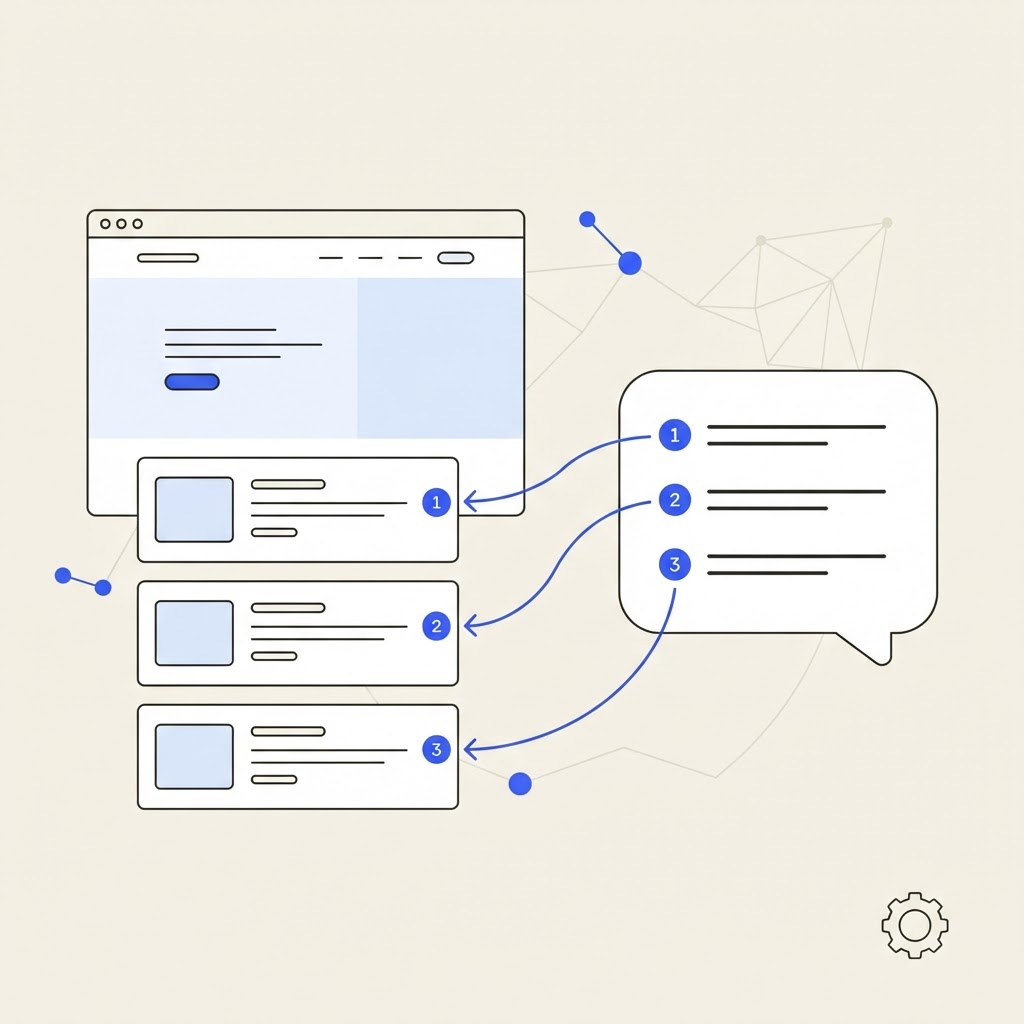
To find out which pages of your site AI cites, ask the questions your buyers ask to each AI assistant, write down every source link each answer shows, and keep the ones on your domain. Then confirm with two signals you already own: visits referred by AI assistants in your analytics, and AI crawler visits in your server logs. An AI visibility tool does the first part every week for you and lists the sources each answer cites.
Most teams know whether AI mentions their brand. Far fewer know which of their pages the assistants actually use. That matters, because a cited page is the one an assistant trusts enough to point buyers to, and it is the page you should keep accurate first.
Why does it matter which pages AI cites?
When an assistant that searches the web builds an answer, it usually shows the pages it relied on. Those links tell you three things:
- What the assistant trusts about you. A cited pricing page or help article is the version of the facts the assistant repeats.
- What is missing. If an assistant answers a question about your product but cites only other sites, your own page on that topic is not doing the job.
- Where to work. In our October 2026 sample of 2,320 AI answers about 38 brands, 88% of cited sources were third-party pages and only 4% were the brands' own websites. Your own pages are a small slice, so knowing exactly which ones make it is useful.
Which AI assistants show their sources?
Most assistants that search the web show links, but in different ways:
| Assistant | How sources usually appear |
|---|---|
| Perplexity | Numbered source links alongside the answer |
| Google AI Overviews | Links to the pages used, next to or under the summary |
| Google AI Mode | Links to the pages used, alongside the answer |
| ChatGPT | Source links when the answer uses web search |
| Gemini | Sometimes shows sources or related links, depending on the answer |
| Claude | Source links when the answer uses web search |
When an answer comes only from what the model learned in training, there may be no links at all. That is one reason to ask the same question several times and to more than one assistant.
How to find which pages of your site AI cites: a 5-step method
- Write 10 to 20 buyer questions without your brand name. Use the words buyers use: "best [category] for [use case]", "how much does [service] cost", "how do I [task your product solves]". Questions that already contain your name only test whether the assistant knows you.
- Ask each question to each assistant. Use a clean session, and add the country or city if it matters to your buyers. Our guide on how to check your AI visibility covers this routine.
- Log every source link. For each answer, note the assistant, the question, whether your brand is named, and every URL cited. A spreadsheet is enough.
- Filter for your domain. The URLs on your site are your cited pages. Count how often each one appears and for which questions.
- Repeat every week. Answers move between weeks and between two runs of the same question, so one round is a snapshot, not a result.
How to confirm it with your own data
Two signals help you cross-check what you logged.
AI referrals in your analytics. When a buyer clicks a source link in an assistant, the visit often arrives with a referrer such as chatgpt.com, perplexity.ai or gemini.google.com. Look at the landing pages of those visits. They show which cited pages actually send people. Not every click carries a referrer, so treat this as a lower bound.
AI crawler visits in your server logs. Assistants fetch pages with named crawlers, for example OAI-SearchBot and ChatGPT-User for ChatGPT, and PerplexityBot for Perplexity. Pages these crawlers fetch often are pages the assistants are reading. A page they never fetch cannot be quoted from a fresh read, so check your robots.txt does not block them.
For Google AI Overviews and Google AI Mode, Google includes their clicks and impressions in Search Console's overall web search data, without a separate filter. Manual checks remain the most direct way to see which of your pages they show.
What if none of your pages are cited?
That is common, and it usually has a fixable cause:
- No page answers the question directly. The answer sits deep in a long page, or does not exist. Add a short, clear answer at the top of a page built for that question.
- The page is hard to read for crawlers. Content loaded only by scripts, blocked crawlers or missing metadata. The free AI visibility checker shows whether AI assistants can read your site.
- Other sites say it better. If review sites and comparison articles cover the topic, the assistant cites them. Being accurately present there matters as much as your own pages.
See why AI does not cite your blog or help docs for the full list of causes and fixes.
Which of your pages are most likely to be cited?
In practice, the pages assistants can quote easily share a few traits. Use this as a checklist for the pages you want cited:
- A title or heading that matches a real buyer question
- A direct answer in the first one or two sentences
- Facts stated plainly: prices, limits, locations, who it is for
- A date or recent update, for topics that change
- The same facts as on your listings and profiles elsewhere
Where Operato AI Fits
Every week, Operato AI asks the buyer questions you choose to Google AI Overviews, Google AI Mode, Gemini and Perplexity on every plan, and to ChatGPT and Claude on the Mini and Starter plans or as add-ons on Solo. For each answer it shows whether your brand is named, in what position, against which tracked competitors, and which sources the answer cites, so you can see when one of your pages is among them.
It then gives you a To do list of fixes. Plans start at $9 a month. To follow how this changes over time, read how to track your brand across AI engines.
FAQ
Which AI visibility tool shows which pages of my site are cited by AI? Look for a tool that logs the sources of every answer, not only whether your brand is named. Operato AI shows which sources each answer cites for the questions you track, which lets you spot the pages on your domain.
Can I see AI citations in Google Analytics? Partly. Visits from assistants often arrive with referrers such as chatgpt.com or perplexity.ai, and their landing pages show which cited pages send traffic. Clicks without a referrer are missed, so it is a lower bound.
Does Search Console show AI Overviews citations separately? No. Google includes AI Overviews and AI Mode in Search Console's overall web search data, with no separate filter for them.
Why is a competitor's page cited instead of mine? Usually because it answers the question more directly, or because third-party sites describe that competitor more often. See how to compare your AI visibility with your competitors'.
How often should I check which pages AI cites? Every week. Sources change as assistants refresh what they read, and one check only shows one moment.