ChatGPT Ads Just Got Sponsored Agents, What Does That Mean If Your Brand Isn't Cited Yet?
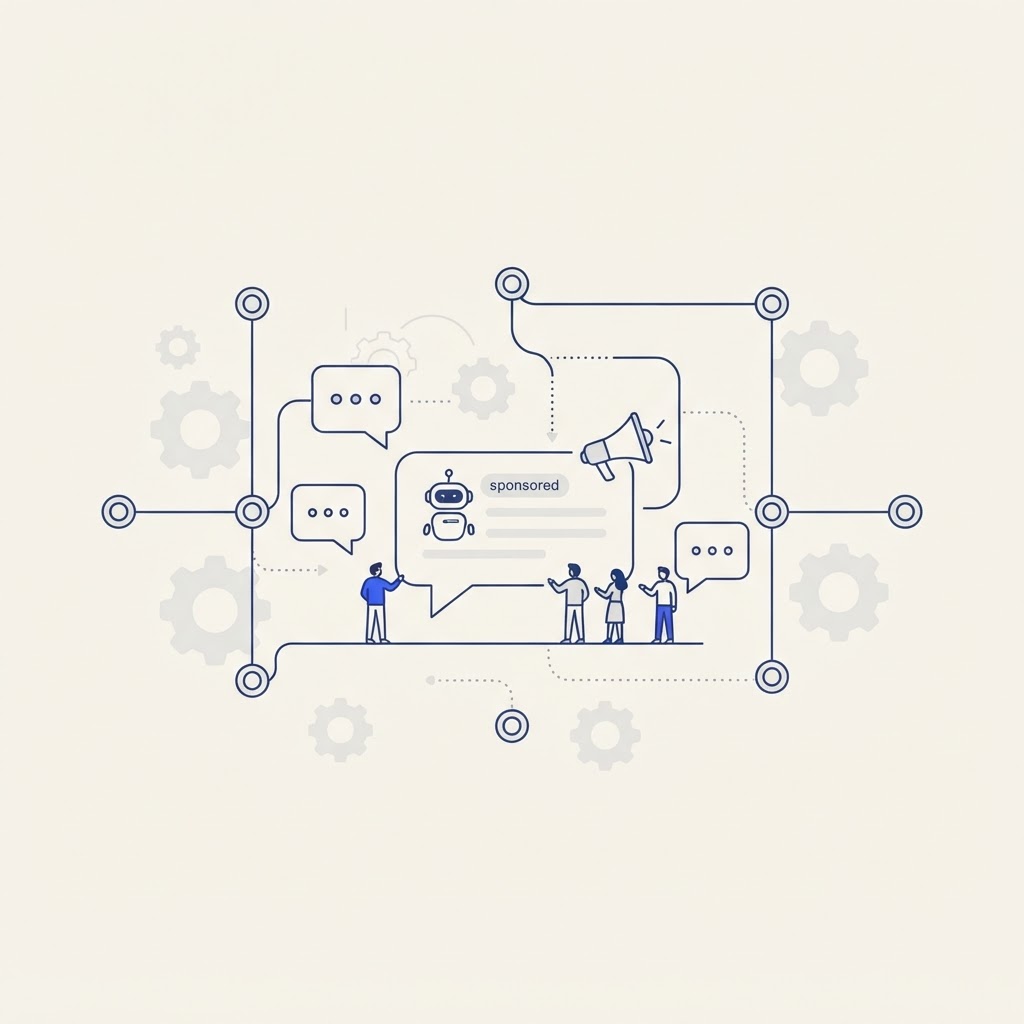
ChatGPT's advertising platform just shipped a round of updates that moves it well past pilot-stage. Impression-based billing for conversions, flexible attribution windows, platform-level targeting, Shopify and HubSpot integrations, AI-assisted ad creation, an Event Quality Score for measurement, and one feature that's a genuinely new interaction model: Sponsored Agents. After a user clicks an ad inside ChatGPT, they may now be able to open a clearly labeled conversation with a business-sponsored agent, ask follow-up questions, and explore the advertiser's offering directly in-chat, currently being tested with a select group of US advertisers.
That last one matters more than the rest combined for anyone thinking about AI visibility. It's not a bigger banner or a smarter targeting knob, it's a new place where a brand can talk to a prospect inside the same surface where that prospect might otherwise be asking ChatGPT an unprompted, unpaid question about your category and getting a competitor's name back.
What's Actually New in ChatGPT's Ad Platform?
Here's the full feature set from the update, described plainly:
- Conversion optimization with impression billing (now generally available): the campaign optimizes for conversions from both clicks and views, but you're billed per impression rather than per click. OpenAI is positioning this as the recommended model for maximizing performance.
- Flexible attribution windows: advertisers can now choose a 7-, 14-, or 30-day click window and a 0- or 1-day view window for conversion reporting in Ads Manager.
- Granular platform targeting: Android app, Android web, desktop web, iOS app, and iOS web can now be targeted and reported on separately, both in Ads Manager and via the Advertiser API.
- Shopify integration: US-based Shopify merchants can connect their product catalog and measurement tools directly from the ChatGPT Ads app in the Shopify App Store, with international availability planned for later this month.
- HubSpot integration: businesses can connect a ChatGPT Ads account inside HubSpot to create ads, track performance, and follow up on leads without leaving their CRM.
- AI-assisted ad creation: suggested copy and imagery generated from the advertiser's landing page and campaign objective, reviewed and edited before going live. Currently in testing.
- Text customization: an opt-in setting that adapts existing headlines and descriptions to fit conversation context, and can translate ad copy into a user's preferred language. Advertisers control whether it's enabled.
- Event Quality Score: available under Tools > Conversions, this gives Pixel and Conversions API data sources a 1-10 setup quality score with recommendations to improve conversion tracking.
- Sponsored Agents (testing, select US advertisers): the in-chat conversational follow-up described above.
Individually, most of these are the kind of maturity features any ad platform adds as it scales, billing flexibility, attribution options, CRM integrations. Sponsored Agents is the one that changes what an "ad" inside ChatGPT actually is.
What Is a Sponsored Agent, and Why Does It Matter for Brand Visibility?
A normal ad click sends someone to a landing page. A Sponsored Agent keeps them inside ChatGPT and hands them off to a business-run, clearly labeled conversational agent that can answer follow-up questions, walk through options, and represent the advertiser's offering in real time, in the same chat window.
That's a meaningfully different surface than organic AI visibility, and it's worth being precise about the difference instead of collapsing the two:
- If your brand already gets cited organically, a Sponsored Agent is a paid extension of a presence you've already earned. It gives you an interactive layer on top of the organic mention, not a replacement for it.
- If your brand doesn't show up organically today, a competitor running a Sponsored Agent can now hold an entire back-and-forth conversation with your prospect inside ChatGPT, at the exact moment that prospect is comparing options, filling a gap your brand never occupied in the first place. The ad isn't replacing an organic answer that named you and got out-argued, it's replacing an organic answer that never mentioned you at all.
Paid reach has always been able to buy attention. What's new is that it can now buy something closer to the conversational answer itself, inside the product where an increasing number of buyers start their research.
Does Paid Reach Replace the Need for Organic AI Visibility?
No, and the distinction is structural, not a matter of budget size. A Sponsored Agent only appears after someone clicks a specific, labeled ad. It has no bearing on what ChatGPT says unprompted, in the millions of conversations where nobody clicks anything, when a prospect just asks "what's a good option for [category]" and gets an answer synthesized from what the model has learned and retrieved about who exists and who's worth mentioning. That answer is exactly what GEO work targets, and no ad spend changes it directly.
There's also a trust asymmetry worth naming plainly: labeled ad content, including a Sponsored Agent conversation, is being read by the user as an ad. An organic mention inside ChatGPT's own answer isn't labeled as anything, it reads as the model's own synthesis. Both matter. They are not the same lever, and treating a Sponsored Agent as a substitute for organic citation work is a real category error, not just an inefficiency.
What Should Marketing Teams Actually Do With This News?
Three concrete things, none of which require waiting for broader Sponsored Agents availability:
- Keep GEO and ChatGPT Ads as two separate budget lines addressing two separate problems. One earns the unprompted answer, the other buys a labeled conversation after a click. Reporting them as the same line item on a dashboard hides which one is actually working.
- If you do test Sponsored Agents, make sure the facts your agent states match what you want ChatGPT saying about you everywhere else. Pricing, positioning, feature claims, a Sponsored Agent that contradicts your organic footprint (or a stale one you haven't audited recently) creates a confusing, inconsistent brand across the same product surface.
- Treat a competitor's ad activity as an audit trigger, not background noise. If a named competitor starts running ads or Sponsored Agents against your category terms, that's exactly the kind of event that should prompt an off-cycle check of where you currently stand organically, not wait for the next scheduled review.
Will This Change Where AI Visibility Work Matters Most?
Probably, at the margins the platform is optimizing for right now. As more advertisers compete for attention at the comparison moment (the point where someone has already narrowed things down and clicks an ad to learn more), that specific slot gets more crowded and more expensive to hold with paid alone. That raises the relative value of the earlier moment ads can't buy directly: what ChatGPT already says, unprompted, when someone describes the problem they're trying to solve before they've clicked on anything. Owning that earlier answer doesn't compete with Sponsored Agents for the same slot, it's a different, earlier slot entirely, and it's the one that determines whether your brand is even in the running by the time a prospect gets to the part of the conversation ads can reach.
FAQ
What is ChatGPT Ads Sponsored Agents? A feature currently being tested with select US advertisers where, after a user clicks an ad inside ChatGPT, they can start a clearly labeled conversation with a business-sponsored agent to ask follow-up questions and explore the advertiser's offering, without leaving the chat.
Do Sponsored Agents replace the need for organic AI visibility work? No. Sponsored Agents only appear after a specific ad click. They have no effect on what ChatGPT says unprompted in conversations where no ad was clicked, which is the much larger set of moments where brand visibility is won or lost.
Is ChatGPT Ads available to everyone? Several features described here, including impression-based conversion billing and flexible attribution windows, are generally available. Sponsored Agents and AI-assisted ad creation are still in testing with limited advertiser access as of this writing.
How is a Sponsored Agent different from a normal ad click to a landing page? A landing page is static and one-directional. A Sponsored Agent is an ongoing, two-way conversation inside ChatGPT itself, closer to a live sales chat than a page visit.
Should I wait for wider Sponsored Agents availability before doing anything? No. The audit and consistency work (making sure your organic AI presence and any paid conversational surface say the same accurate things about you) is useful regardless of when or whether you end up running Sponsored Agents yourself.
Operato AI tracks what ChatGPT, Gemini, Perplexity, and more say about your brand in the unprompted, unpaid conversations no ad budget reaches. Book a call to see where you currently stand, or learn more about our approach and team.